Challenges create opportunities, and this is particularly relevant during tough economic conditions. It is not enough to review your own internal cost cutting measures. A global economic crisis demands attention to the needs of clients, consumers, and your strategic partners. To look out for your future means looking outside your company and adjusting your internal strategy to accommodate future growth.
Summing It Up in Two Statistics
A survey by Harris Interactive revealed that 52% of customers responded that Outstanding Service is the number one reason for doing business with a company. 38% responded that Lowest Price is the number one reason to do business with a company. What does overwhelming statistic mean in a strategic sense? It is simple, while striving to reduce cost and offer a competitively priced product or solution, do not sacrifice your customer service or you will be the one ultimately paying the price.
Top Tips
Cost cutting cannot make up for economic challenges if the reductions impact your ability to generate revenue. When revenue and consumer spending is scarce, it is even more important to leverage your organization's ability to create new opportunities and to satisfy existing customers. Consider new services from within your organization and from innovative partners to stimulate your own economic recovery by offering outsourcing and cost cutting opportunities to your clients. Clients and consumers are willing to investigate low cost customer satisfying options that they may have ignored during better conditions. Helping customers cut costs may create new service revenues for your company.
Don't discontinue any existing customer initiatives during uncertain economic times. If necessary, adjust the scope or the schedule of your initiatives to accommodate your budget or your client's budget. Demonstrate your commitment to your clients and your willingness to persevere.
Proactively communicate with your customers. Maintain a strong relationship and do not allow an opportunity for your competition to steal your clients. Furthermore, make sure that you are aware of the financial conditions of your clients. Help your customer to deal with economic challenges, and be aware of how the profitability of your customers will impact your own business trends.
Organizations and consumers are much more deliberate about purchasing decisions during uncertain economic times. Provide adequate information for your customers to make informed decisions, and provide economic comparisons to demonstrate your competitive virtues. Make it easy for your customers to recognize the financial benefits of your products or services in comparison to competition, alternatives, or lack of action. Sometimes a lack of purchase, or lack of investment, can have detrimental fiscal impact on your clients, Make it easy for your customers to justify the decision to invest in you.
When budgets and pocketbooks are tight, purchasing decisions are often delayed. During these conditions, it is even more important to nurture your pipeline and to maintain a stream of communications with prospects and the market. Many organizations reduce marketing and communications budgets to cut expenses when time are tough. There may be discounts available for advertising. Look for opportunities to convey your message, especially for the gaps created by suddenly absent competitors.
Monitor the return on your marketing and service investments. Identify those opportunities that have the highest yield for both short term and long term profitability. Shift your investments to the areas with the highest returns and lowest risk.
Invest in innovation and technology. Improving your infrastructure should improve internal efficiency with applicable automation, and investments should also improve customer satisfaction. Some IT investments directly impact your customers, and some improvements enable the internal resources to better monitor and be responsive to the needs of customers. Before slashing a program from your IT budget, consider how it will impact the ability to take care of customers, and how that reflects on your ability to sustain the revenue that comes from loyal customers. Customers will remember your actions long after the economic hardships have receded. Your communications and your commitments to your customers will be remembered long after the pains of the uncertain economic turmoil if forgotten.
IT Investments
TechWeb Research asked the question, "How important are each of the following business imperatives in terms of priorities that your IT organization must support?" The results of this survey were published as "The State of Business".
Improving Customer Responsiveness: 64% High Importance, 30% Medium Importance, 6% Low Importance
Reducing Costs: 63% High Importance, 32% Medium Importance, 5% Low Importance
Speeding Product Delivery to Market: 57% High Importance, 33% Medium Importance, 10% Low Importance
More Agile and Streamlined Integrated Supply Chains: 41% High Importance, 48% Medium Importance, 23% Low Importance
Global / International Expansion: 38% High Importance, 27% Medium Importance, 35% Low Importance
Integration due to Mergers and Acquisitions: 24% High Importance, 40% Medium Importance, 36% Low Importance
How would you rate each of these areas with regards to importance?
How do you think that you organization rates the importance of each of these areas?
How do you demonstrate the importance of these areas in your decisions, your budget, and your strategic initiatives? Customers will make their current and future purchasing decisions based on the communications and decisions that you demonstrate today.
______________________________________________________
Words of Wisdom
"Technology is a way of organizing the universe so that man doesn't have to experience it."- Max Frisch
"For a list of all the ways technology has failed to improve the quality of life, please press three."- Alice Khan
"Letting your customers set your standards is a dangerous game, because the race to the bottom is pretty easy to win. Setting your own standards--and living up to them--is a better way to profit. Not to mention a better way to make your day worth all the effort you put into it.”- Seth Godin
______________________________________________________
Showing posts with label Customer Service. Show all posts
Showing posts with label Customer Service. Show all posts
Monday, May 11, 2009

Monday, September 22, 2008
The Difference between Being Right and Doing the Right Thing
Is it better to be right, or to do right? Is there a real difference between being right and doing the right thing? When it comes to communications, support, and teamwork, there is a perceptible difference between the two.
Customer Service
Assisting customers can be rewarding, frustrating, and downright annoying. The scope of dealing with customers is as diverse as the personalities of the individual customers and the situation that each customer is experiencing. Some customers are grateful for assistance, and express appreciation for the efforts to help them. Some customers are frustrated by a situation or experience, and may express aggravation in a myriad of unpleasant ways. After an interaction with a highly charged angry customer, it can be challenging to not allow the experience to influence your attitude toward the next customer experience. Recipients of highly charged emotional outbursts may carry the experience beyond the workplace. There is a way to dissuade this personalization of an intense exchange with a frustrated customer, and to alleviate the personal aggravation that may result from the experience.
Perhaps one of the most frustrating experiences in providing customer service is the occasional encounter with a customer who is deliberately providing false or misleading information. Regardless of the reason that the customer is being deceptive, it is tempting to be insulted or annoyed by such an encounter. The frustration from this type of experience can also be alleviated with the proper approach to handling the customer.
In the case of angry, belligerent, and deceptive customers, a common response is the feeling that it is necessary to prove that we are right. In an effort to prove that we are right, it may also imply that someone else is wrong. That someone who is implicated as the individual in the wrong is none other than the customer. In the effort to prove that we are right, we may alienate the customer and create a situation in which our interests are at odds with one another. The focus of the interaction and the dialogue may shift from addressing a specific issue, and turn to the great divide between who is right, and who is wrong. The effort to be right, or to prove that we are right, may intensify the anger, frustration, or deceit without making any progress to resolve the underlying problem. In addition to losing the customer loyalty, the result is quite often an unsatisfying exchange that leaves both parties with lingering aggravation. There is no lasting satisfaction from an empirical victory that proves we are right, at the cost of neglecting what is the right thing to do.
To overcome the emotional experience exchange, maintain a clear and concentrated focus on doing what is right. It may be necessary to explain your actions or response with the perception of why you believe that you are doing the right thing. This is not to imply that you are right, but rather why you believe that it is the right thing to do for the customer. Simply saying that it is policy is not usually a satisfactory explanation. It may be necessary to provide a reasonable rationale for the policy. Doing the right thing may or may not include a customer accommodation, and sometimes even the accommodation is not satisfactory. If you can maintain a concentrated focus on the issues and the right thing to do for your customer, avoiding the interpersonal battle of who is right or wrong, you can align yourself with the customer and endeavor to be a customer advocate. Acting as an advocate for your customer in earnest will give you the lingering satisfaction that you have honestly endeavored to do the right thing, regardless of the outcome.
Teamwork
It is unfortunate that similar battles occur with the workplace. As pressure builds and personalities collide, it is inevitable that conflicts arise in which members of the same workplace community are at odds regarding who is right, and who is wrong. Sometimes there is a perceived need for an individual to prove him or her right. This personal need is harbored internally, just waiting for an opportunity to pounce upon an unsuspecting coworker. As internal frustration builds, it may erupt as a volcano of capital letters or profanity in an email or personal confrontation. Email has made it far too easy to attack coworkers and expose inner frailties to the masses while maintaining a temporary safe distance. Confrontational emails are public demonstrations of personal attacks that typically coincide with vicious rumors and unhealthy gossip. The public effort to aggressively prove one as being right is often the public display of a rot that has been growing beneath the surface. The damage to all parties involved, and the collateral damage to innocent bystanders copied on the communications, can be detrimental to teamwork and motivation of the organization.
The vision of what is right and in the best interest of the company or customers may vary between individuals. It is expected that perception and description of the right direction may be shaped by previous experiences, successes, and knowledge. When these experiences and perspectives are shared in a respectful manner between individuals, it fosters a community approach and a sense of unity. Even when individuals disagree on the definition of what is right, it is possible to acknowledge, understand, and agree on a collaborative course of action. Differences in opinion on the right thing to do may also create opportunities for alternatives and back up plans. The key is to be respectful of the experiences and successes of the other individuals within the company team, regardless of personal perspectives or personalities. The important thing is to come to consensus on the right course of action, rather than debating which person is right. Being able to distinguish what is right, from who is right, is the mark of a mature organization on the path to success.
You may read this and think that it is right, or you may have another perspective. I respect your opinion. In any case, this may be an opportunity to create some dialogue within your own organization to discuss and collaborate on what is the right course of action for you and your customers. I trust that you will find satisfaction in doing the right thing, with an understanding that the definition of what is right may evolve and adapt over time.
Keep smiling.
______________________________________________________
Words of Wisdom
"When a distinguished but elderly scientist states that something is possible, he is almost certainly right. When he states that something is impossible, he is very probably wrong."- Arthur C. Clarke
"A child becomes an adult when he realizes that he has a right not only to be right but also to be wrong." - Thomas Szasz
"Always do right. This will gratify some people and astonish the rest."- Mark Twain
______________________________________________________
You may distribute this article freely, print it, sell it, or include it as part of a package as long as it is intact, unchanged and delivered in the original format with acknowledgement to Executive Blueprints Inc.
About the Author:
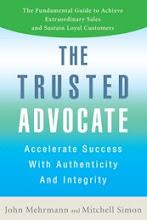
John Mehrmann is a freelance writer and President of Executive Blueprints Inc., an organization devoted to improving business practices and developing human capital. www.ExecutiveBlueprints.com provides resource materials for trainers, sample Case Studies, educational articles and references to local affiliates for consulting and executive coaching. http://www.InstituteforAdvancedLeadership.com provides self-paced tutorials for personal development and tools for trainers. Presentation materials, reference guides and exercises are available for continuous development.
Customer Service
Assisting customers can be rewarding, frustrating, and downright annoying. The scope of dealing with customers is as diverse as the personalities of the individual customers and the situation that each customer is experiencing. Some customers are grateful for assistance, and express appreciation for the efforts to help them. Some customers are frustrated by a situation or experience, and may express aggravation in a myriad of unpleasant ways. After an interaction with a highly charged angry customer, it can be challenging to not allow the experience to influence your attitude toward the next customer experience. Recipients of highly charged emotional outbursts may carry the experience beyond the workplace. There is a way to dissuade this personalization of an intense exchange with a frustrated customer, and to alleviate the personal aggravation that may result from the experience.
Perhaps one of the most frustrating experiences in providing customer service is the occasional encounter with a customer who is deliberately providing false or misleading information. Regardless of the reason that the customer is being deceptive, it is tempting to be insulted or annoyed by such an encounter. The frustration from this type of experience can also be alleviated with the proper approach to handling the customer.
In the case of angry, belligerent, and deceptive customers, a common response is the feeling that it is necessary to prove that we are right. In an effort to prove that we are right, it may also imply that someone else is wrong. That someone who is implicated as the individual in the wrong is none other than the customer. In the effort to prove that we are right, we may alienate the customer and create a situation in which our interests are at odds with one another. The focus of the interaction and the dialogue may shift from addressing a specific issue, and turn to the great divide between who is right, and who is wrong. The effort to be right, or to prove that we are right, may intensify the anger, frustration, or deceit without making any progress to resolve the underlying problem. In addition to losing the customer loyalty, the result is quite often an unsatisfying exchange that leaves both parties with lingering aggravation. There is no lasting satisfaction from an empirical victory that proves we are right, at the cost of neglecting what is the right thing to do.
To overcome the emotional experience exchange, maintain a clear and concentrated focus on doing what is right. It may be necessary to explain your actions or response with the perception of why you believe that you are doing the right thing. This is not to imply that you are right, but rather why you believe that it is the right thing to do for the customer. Simply saying that it is policy is not usually a satisfactory explanation. It may be necessary to provide a reasonable rationale for the policy. Doing the right thing may or may not include a customer accommodation, and sometimes even the accommodation is not satisfactory. If you can maintain a concentrated focus on the issues and the right thing to do for your customer, avoiding the interpersonal battle of who is right or wrong, you can align yourself with the customer and endeavor to be a customer advocate. Acting as an advocate for your customer in earnest will give you the lingering satisfaction that you have honestly endeavored to do the right thing, regardless of the outcome.
Teamwork
It is unfortunate that similar battles occur with the workplace. As pressure builds and personalities collide, it is inevitable that conflicts arise in which members of the same workplace community are at odds regarding who is right, and who is wrong. Sometimes there is a perceived need for an individual to prove him or her right. This personal need is harbored internally, just waiting for an opportunity to pounce upon an unsuspecting coworker. As internal frustration builds, it may erupt as a volcano of capital letters or profanity in an email or personal confrontation. Email has made it far too easy to attack coworkers and expose inner frailties to the masses while maintaining a temporary safe distance. Confrontational emails are public demonstrations of personal attacks that typically coincide with vicious rumors and unhealthy gossip. The public effort to aggressively prove one as being right is often the public display of a rot that has been growing beneath the surface. The damage to all parties involved, and the collateral damage to innocent bystanders copied on the communications, can be detrimental to teamwork and motivation of the organization.
The vision of what is right and in the best interest of the company or customers may vary between individuals. It is expected that perception and description of the right direction may be shaped by previous experiences, successes, and knowledge. When these experiences and perspectives are shared in a respectful manner between individuals, it fosters a community approach and a sense of unity. Even when individuals disagree on the definition of what is right, it is possible to acknowledge, understand, and agree on a collaborative course of action. Differences in opinion on the right thing to do may also create opportunities for alternatives and back up plans. The key is to be respectful of the experiences and successes of the other individuals within the company team, regardless of personal perspectives or personalities. The important thing is to come to consensus on the right course of action, rather than debating which person is right. Being able to distinguish what is right, from who is right, is the mark of a mature organization on the path to success.
You may read this and think that it is right, or you may have another perspective. I respect your opinion. In any case, this may be an opportunity to create some dialogue within your own organization to discuss and collaborate on what is the right course of action for you and your customers. I trust that you will find satisfaction in doing the right thing, with an understanding that the definition of what is right may evolve and adapt over time.
Keep smiling.
______________________________________________________
Words of Wisdom
"When a distinguished but elderly scientist states that something is possible, he is almost certainly right. When he states that something is impossible, he is very probably wrong."- Arthur C. Clarke
"A child becomes an adult when he realizes that he has a right not only to be right but also to be wrong." - Thomas Szasz
"Always do right. This will gratify some people and astonish the rest."- Mark Twain
______________________________________________________
You may distribute this article freely, print it, sell it, or include it as part of a package as long as it is intact, unchanged and delivered in the original format with acknowledgement to Executive Blueprints Inc.
About the Author:
John Mehrmann is a freelance writer and President of Executive Blueprints Inc., an organization devoted to improving business practices and developing human capital. www.ExecutiveBlueprints.com provides resource materials for trainers, sample Case Studies, educational articles and references to local affiliates for consulting and executive coaching. http://www.InstituteforAdvancedLeadership.com provides self-paced tutorials for personal development and tools for trainers. Presentation materials, reference guides and exercises are available for continuous development.
Subscribe to:
Posts (Atom)